Museum Collection
Back To Museum
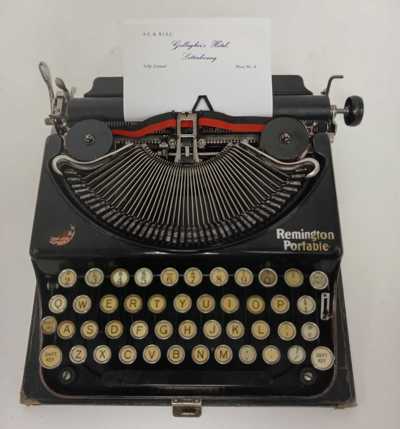
 Remington Portable Typewriter in excellent condition. This typewriter was used to type up breakfast, lunch and dinner menus for Gallagher's Hotel in Letterkenny in the 1960s and 70s. Gallagher's was a popular Hotel in Letterkenny and stood on the site where Mc Gettigan's Hotel stands today. It was kindly donated to the museum collection by a member of the Glenfield family, who owned the hotel up until 1980. The donation also came with blank menu sheets. (DCM.2026.002)
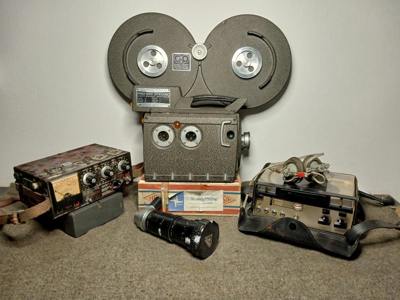
Auricon film equipment from well-known journalist Joe Mc Garrigle (1916-1993) from Donegal Town. As a feature writer, journalist and cameraman, Joe was a very successful chronicler of peoples' lives for over 50 years in Donegal. As a journalist, he was a regular contributor for Radio Eireann and was appointed cameraman and correspondent for the North-West for RTE, covering many important events and documenting old traditions on the wane to a modernising society. (DCM.2025.1)
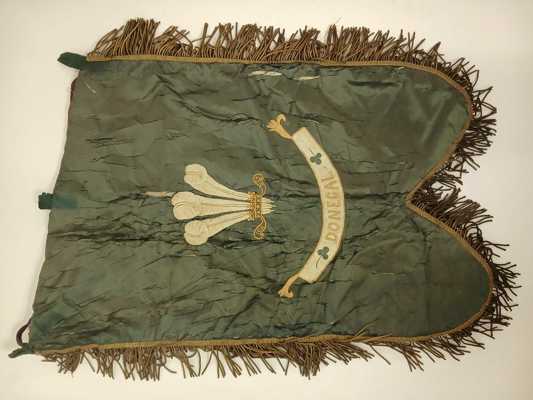
This silk bannerette from the Donegal Militia is from the early 19th century and its acquisition was supported by the Friends of the National Collections of Ireland. The Donegal Militia (also known as the Prince of Wales's Own Donegal Militia) saw action in the 1798 Rebellion and the Napoleonic Wars. Revived in 1855 after a long period of Militia decline across Ireland, it became known as the Donegal Artillery Militia where it famously fought in the Second Boer War. (DCM.2025.58)
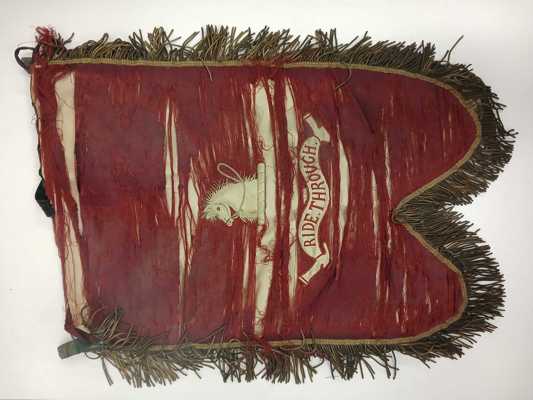
Rear side of Bannerette. (DCM.2025.58)
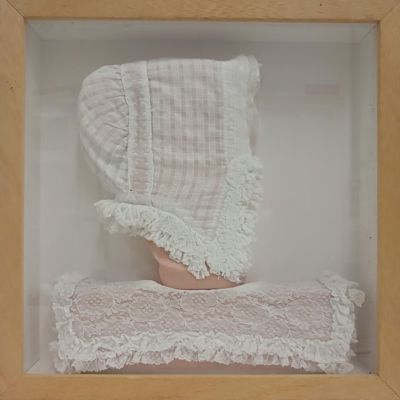
19th century lace bonnet belonging to Katie Doherty (b1842) from Carrick, Co. Donegal. Kindly donated by a great granddaughter of Katie here to the museum, it had been previously mounted in a wooden case for a family reunion and this has helped it stay in immaculate condition since. Lacemaking was a wonderful skill practiced by women all around the country who learned it from early years in school after it become increasingly popular in the 18th century. (DCM.2026.003)
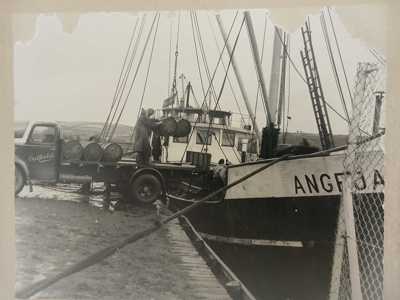
This photograph is dated to March 1953. The caption reads 'Unloading of Glucose at Letterkenny Port'. Glucose was shipped form around the world to make sweets at the Oatfield Factory in Letterkenny. The location is likely the Thorn Pier just outside Letterkenny town on the shores of the River Swilly to the east. (DCM.2025.78)
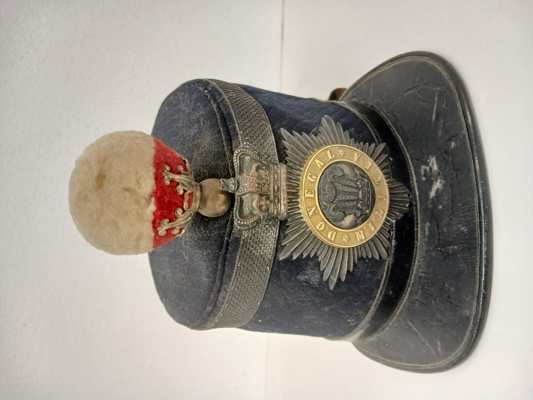
Shako Cap from Donegal Militia Collection. These caps were popular among local militia and British Army regiments throughout the 19th century. (DCM.2025.57)
Remington Portable Typewriter in excellent condition. This typewriter was used to type up breakfast, lunch and dinner menus for Gallagher's Hotel in Letterkenny in the 1960s and 70s. Gallagher's was a popular Hotel in Letterkenny and stood on the site where Mc Gettigan's Hotel stands today. It was kindly donated to the museum collection by a member of the Glenfield family, who owned the hotel up until 1980. The donation also came with blank menu sheets. (DCM.2026.002)
Auricon film equipment from well-known journalist Joe Mc Garrigle (1916-1993) from Donegal Town. As a feature writer, journalist and cameraman, Joe was a very successful chronicler of peoples' lives for over 50 years in Donegal. As a journalist, he was a regular contributor for Radio Eireann and was appointed cameraman and correspondent for the North-West for RTE, covering many important events and documenting old traditions on the wane to a modernising society. (DCM.2025.1)
This silk bannerette from the Donegal Militia is from the early 19th century and its acquisition was supported by the Friends of the National Collections of Ireland. The Donegal Militia (also known as the Prince of Wales's Own Donegal Militia) saw action in the 1798 Rebellion and the Napoleonic Wars. Revived in 1855 after a long period of Militia decline across Ireland, it became known as the Donegal Artillery Militia where it famously fought in the Second Boer War. (DCM.2025.58)
Rear side of Bannerette. (DCM.2025.58)
19th century lace bonnet belonging to Katie Doherty (b1842) from Carrick, Co. Donegal. Kindly donated by a great granddaughter of Katie here to the museum, it had been previously mounted in a wooden case for a family reunion and this has helped it stay in immaculate condition since. Lacemaking was a wonderful skill practiced by women all around the country who learned it from early years in school after it become increasingly popular in the 18th century. (DCM.2026.003)
This photograph is dated to March 1953. The caption reads 'Unloading of Glucose at Letterkenny Port'. Glucose was shipped form around the world to make sweets at the Oatfield Factory in Letterkenny. The location is likely the Thorn Pier just outside Letterkenny town on the shores of the River Swilly to the east. (DCM.2025.78)
Shako Cap from Donegal Militia Collection. These caps were popular among local militia and British Army regiments throughout the 19th century. (DCM.2025.57)
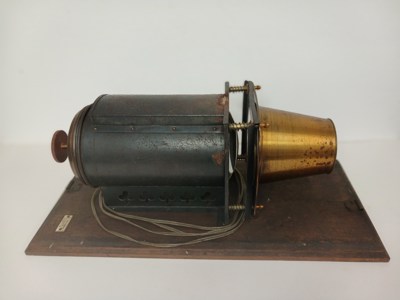
 A 'Magic Lantern'. Used to project light shows to astound audiences since the 17th century. This is one the last models from the 1950s. (DCM.2025.80)
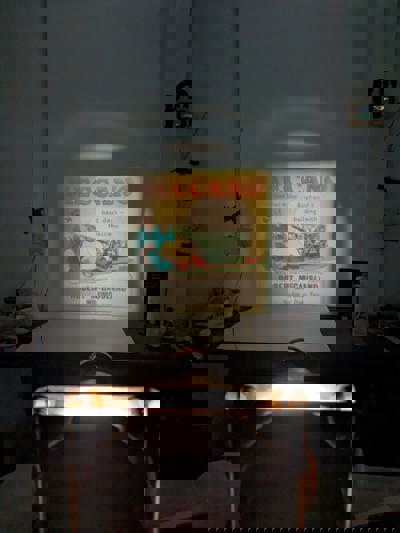
Magic Lanterns were also used to project advertisements. Here we have one from Mc Causland's in Milford advertising the sale of Meccano (1940s).
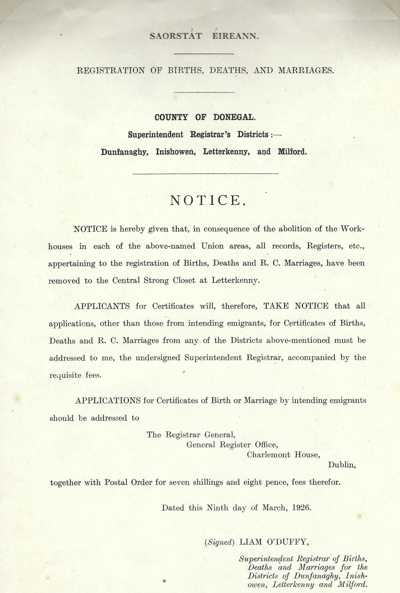
Document by the newly formed Saorstát Éireann (Irish Free State) informing the public where they could register births, deaths & marriages following the recent closure of the workhouses. It gives an interesting insight into the formation of new local government agencies as Ireland entered a new era following the War of Independence, subsequent creation of the border as well as the end of the tenure of the Board of Guardians managing most aspects of public life in local areas from workhouses. (DCM.88.2435)
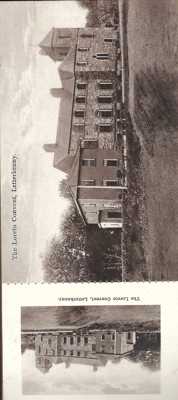
Rare image of the Loretto Convent Letterkenny from a small booklet of postcards from Letterkenny issued in the early 1900s.
A 'Magic Lantern'. Used to project light shows to astound audiences since the 17th century. This is one the last models from the 1950s. (DCM.2025.80)
Magic Lanterns were also used to project advertisements. Here we have one from Mc Causland's in Milford advertising the sale of Meccano (1940s).
Document by the newly formed Saorstát Éireann (Irish Free State) informing the public where they could register births, deaths & marriages following the recent closure of the workhouses. It gives an interesting insight into the formation of new local government agencies as Ireland entered a new era following the War of Independence, subsequent creation of the border as well as the end of the tenure of the Board of Guardians managing most aspects of public life in local areas from workhouses. (DCM.88.2435)
Rare image of the Loretto Convent Letterkenny from a small booklet of postcards from Letterkenny issued in the early 1900s.
Donegal County Museum collects and preserves the material heritage of County Donegal for future generations. We seek to collect items that are associated with or help to illustrate the general history of the county. This includes items made in, at some point used within or otherwise provenanced to County Donegal. Our ever-growing collection helps to tell the story of the county from the end of the last Ice Age to the present day.
We currently care for over 10,000 artefacts in our collection and its growing with each donation. If you are interested in donating collections to the museum you can find more info here.
View some of our recent donations in the gallery below. You can also see some of our collections on display in 3D.
Remington Portable Typewriter in excellent condition. This typewriter was used to type up breakfast, lunch and dinner menus for Gallagher's Hotel in Letterkenny in the 1960s and 70s. Gallagher's was a popular Hotel in Letterkenny and stood on the site where Mc Gettigan's Hotel stands today. It was kindly donated to the museum collection by a member of the Glenfield family, who owned the hotel up until 1980. The donation also came with blank menu sheets. (DCM.2026.002)
Auricon film equipment from well-known journalist Joe Mc Garrigle (1916-1993) from Donegal Town. As a feature writer, journalist and cameraman, Joe was a very successful chronicler of peoples' lives for over 50 years in Donegal. As a journalist, he was a regular contributor for Radio Eireann and was appointed cameraman and correspondent for the North-West for RTE, covering many important events and documenting old traditions on the wane to a modernising society. (DCM.2025.1)
This silk bannerette from the Donegal Militia is from the early 19th century and its acquisition was supported by the Friends of the National Collections of Ireland. The Donegal Militia (also known as the Prince of Wales's Own Donegal Militia) saw action in the 1798 Rebellion and the Napoleonic Wars. Revived in 1855 after a long period of Militia decline across Ireland, it became known as the Donegal Artillery Militia where it famously fought in the Second Boer War. (DCM.2025.58)
Rear side of Bannerette. (DCM.2025.58)
19th century lace bonnet belonging to Katie Doherty (b1842) from Carrick, Co. Donegal. Kindly donated by a great granddaughter of Katie here to the museum, it had been previously mounted in a wooden case for a family reunion and this has helped it stay in immaculate condition since. Lacemaking was a wonderful skill practiced by women all around the country who learned it from early years in school after it become increasingly popular in the 18th century. (DCM.2026.003)
This photograph is dated to March 1953. The caption reads 'Unloading of Glucose at Letterkenny Port'. Glucose was shipped form around the world to make sweets at the Oatfield Factory in Letterkenny. The location is likely the Thorn Pier just outside Letterkenny town on the shores of the River Swilly to the east. (DCM.2025.78)
Shako Cap from Donegal Militia Collection. These caps were popular among local militia and British Army regiments throughout the 19th century. (DCM.2025.57)
A 'Magic Lantern'. Used to project light shows to astound audiences since the 17th century. This is one the last models from the 1950s. (DCM.2025.80)
Magic Lanterns were also used to project advertisements. Here we have one from Mc Causland's in Milford advertising the sale of Meccano (1940s).
Document by the newly formed Saorstát Éireann (Irish Free State) informing the public where they could register births, deaths & marriages following the recent closure of the workhouses. It gives an interesting insight into the formation of new local government agencies as Ireland entered a new era following the War of Independence, subsequent creation of the border as well as the end of the tenure of the Board of Guardians managing most aspects of public life in local areas from workhouses. (DCM.88.2435)
Rare image of the Loretto Convent Letterkenny from a small booklet of postcards from Letterkenny issued in the early 1900s.